CASE STUDY — RIVER TONE, SOMERSET, 2026
RISKS BEYOND HUMAN EYES
A river is never one world.
UWE Bristol × More Than Human Lens, with ASRA · Funded by the Ecological Citizen(s) Network+ (EPSRC/UKRI: EP/W020610/1)

THE QUESTION
What if systemic risk began from the lives inhabiting the river?
The River Tone runs some thirty miles from Exmoor to the Somerset Levels. It is monitored, modelled, drained and restocked, and depending on who you ask it is recovering, under stress, in crisis, or fine. Before any of that, it is home to many.
Risk assessment usually looks at a river from one angle: human priorities, at human scales, on human timescales. For six months, people living along the whole Tone, from headwaters to mouth, each worked alongside one non-human animal to ask what risk looks like from inside the lives of the river’s inhabitants. They used it as a method, not a metaphor.
LOCATION
River Tone bioregion, Somerset, UK
DURATION
January–July 2026
PEOPLE
26 took part, from 80% of the river’s main tributaries
GATHERINGS
5, with months of fieldwork in between
PARTNERS
UWE Bristol · More Than Human Lens · ASRA · Friends of Longrun Meadow · Somerset Wildlife Trust
FUNDER
Ecological Citizen(s) Network+ (EPSRC/UKRI)
FIVE KIN
Five lives. Five ways into the river.
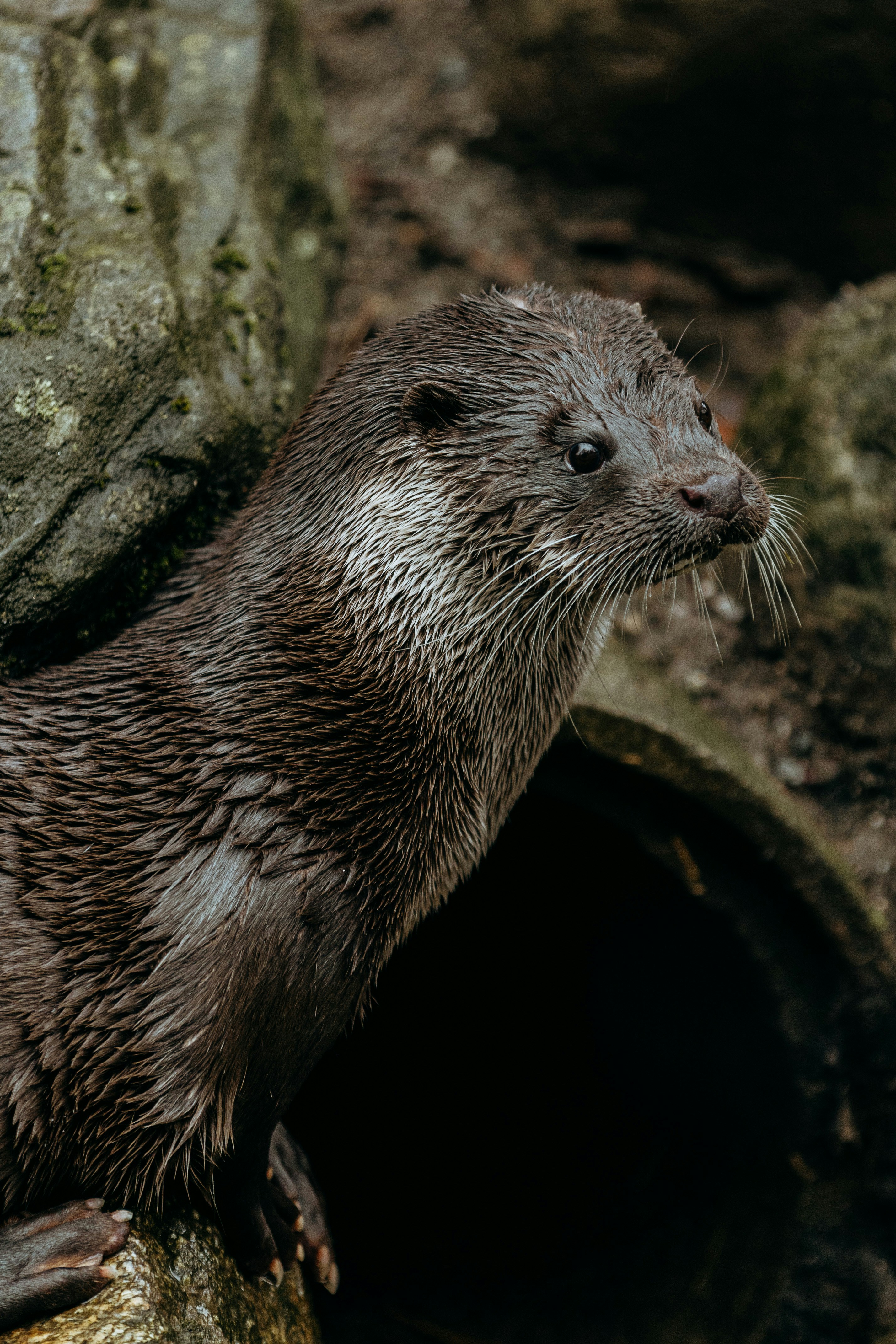
Each participant chose one animal kin. The five were not chosen as illustrations or as extra stakeholders. Each one changes which relations, frictions and dependencies in the landscape become perceptible at all.
FROM MTHL TO RIVER TONE
From speculative sensory worlds to a situated risk methodology
More Than Human Lens began with one question: how can we imagine other sensory worlds? The Toolkit works through Umwelt, species research, speculative narrative and anti-anthropocentric checks. Its starting assumption is that a shared environment is not experienced in a shared way.
River Tone asked something sharper. Could that imagination hold up inside a real process of systemic risk assessment, with real people, a real catchment, and decisions at the end?
Through the Ecological Citizen(s) Network+, the MTHL approach became part of a six-month project with ASRA and community partners along the river. It was adapted in three directions:
From imagining to attending. The Toolkit’s speculative exercises became field practices, gathered in the Animal Collaboration Guide.
From one animal to a living web. Attention moved from a single species to the relations, edges and rhythms that hold a life in place.
From insight to evidence. Noticing had to become something traceable that could be shared, compared and mapped.

Beyond the like
Questioning representations

Umwelt Log
Exploring sensory worlds

Invent a sensory word
Testing narrative and imagination

Changing voices
Experimenting with plural perspectives

Animal Collaboration Guide
A field method for researching, attending to and working with animal kin.

Species Data Sheets
A researched baseline for each kin's sensory ecology and dependencies.

Interspecies Assembly
A collective format for sharing, testing and mapping situated accounts across species.

Core Ontology / Risk Inventory
A shared structure for translating situated accounts into relational data for systemic risk assessment.

Animal-Centred Situated Accounts
Accounts given by each participant as proxy for their kin: specific encounters, frictions and risks.

Systemic Risk Map
A digital platform that makes visible the relationships, risks and dependencies that emerged.
SIX MONTHS OF ATTENTION
Jan → Feb → Mar → Apr → May
The gatherings structured the project, but most of the work happened between them: alone, on a riverbank, at the wrong time of day for humans.
JAN · Launch
Participants meet online and each chooses an animal kin.
Between: species research, with a Species Data Sheet for each kin.
FEB · Attention
A first sensory displacement at the river’s edge. Everyone takes home the Animal Collaboration Guide.
Between: a month of fieldwork with the guide, around 52 hours with the animals.
MAR · Accounts
The interspecies assembly: frictions mapped across species. Each participant gives an account as proxy for their kin.
Between: the accounts are analysed and a first digital map takes shape.
APR · Responses
Speaking as their kin, participants turn what each animal already does into courses of action.
Between: 28 proposals are filtered, and 21 go forward into a thirty-year plan.
MAY · Handover
The plan and the platform are handed back to the community.
AFTER · What’s next
Restoration along the river, a Rights Charter taken to Taunton Town Council, and a legal proposal on what animals contribute to knowledge.
ATTENTION AS METHOD
Describe first. Label later.
The aim was never to see through an animal’s eyes. It was to learn to notice what might matter to them.
The Animal Collaboration Guide moves through three stages:
1
Entering the situation: noticing without seeking, tracking without capture. You may never see your animal kin. Stay anyway.
2
Relations, disruptions and time: mapping the assemblage, following edges, attuning to rhythms that run outside human schedules.
3
From attentiveness to pre-risk: a friction log and thresholds. Where does life become harder, which relation is touched, and on what evidence?
The desk–field loop. This comes from ethnographic fieldwork. The desk prepares attention and the field recalibrates it. Desk gives prompts. Field gives frictions. Your notes hold the tension.
The Field Diary separates what was observed [O], external evidence [E], inference [I], newly created categories [C], and frictions [R]. Nothing is labelled before it has been described.

Entering the situation, from the Animal Collaboration Guide.

The Field Diary and its annotation symbols, from the Animal Collaboration Guide.
ONE ACCOUNT · OTTER-01 · HELE BROOK, NEAR THREE BRIDGES
A spate. The stream forced through a narrow culvert beneath the road. The water rushes in a solid mass with no slow edge to use. Too strong to swim. Climb out. Cross the tarmac: lights from both sides, noise, fast machines. A near-miss. Return upstream.
“I survived. But I have no ability to mitigate that danger for myself. And I will have to do it again.”
— Otter-01, March 2026
A river-barrier audit records an obstacle: culvert, impassable at high flow. The account makes something else perceptible: a recurring danger the otter can recognise but cannot mitigate, in a life that must cross again after every spate. It also creates an obligation. The person who attended to that life can carry it where the otter cannot go.

The M5 underpass, where road, water and multispecies movement meet. Photo © River Tone, 2024.
FROM ACCOUNT TO ANALYSIS
How do you translate an animal-centred account without translating the animal out of it?
This was the project’s hardest methodological problem. The project answered it with structure rather than by claiming access to animal minds.
Interspecies assembly. Each participant first wrote down their kin’s frictions in a fixed shape: zone, rhythm, what becomes harder, relation touched, evidence (direct, indirect or inferred). Species groups compared them. Then everyone painted them onto one map of the catchment.
Animal-centred accounts. Speaking as their kin, participants recounted a single episode, located on the map. The account stayed in the animal’s terms: signals, effort, blockage, timing, presence. Words like cascading, systemic or severity were held back.
Translation as a separate, authored step. Only afterwards did the project translate accounts into risk language, each claim with a confidence level and at least one alternative reading. The habit of keeping observation and inference apart, practised for a month in the field, is what made this possible.
A shared ontology. The project built a common vocabulary for how each organism senses, moves, lives socially and becomes exposed to harm. It covers sensory disruption, restriction, physical and mental injury, and the breaking of learned traditions. This gave the accounts somewhere to land without being flattened.

The catchment map after the interspecies assembly, March 2026.

My Collaboration with Worm of Stockwell Stream: a participant’s diagram, made while working with the Animal Collaboration Guide, March 2026.
WHAT BECAME VISIBLE
Risk, seen from inside other lives
Relational risk. Kin with very different needs converged on the same places and conditions: wide riparian margins, uncompacted soil, unbroken corridors. Without healthy earthworms, no thriving salmon; without salmon, no otters. It is a chain of dependencies with no single visible point of failure, which is why it appears on no management dashboard.
Temporal risk. Much of what matters happens off the human schedule: at night, during migration, in the hours a sewage outfall releases, in a summer too low for smolts to leave. Harm that is out of phase with human attention goes unrecorded.
Epistemic risk. Some harms are invisible to human-centred categories: vibration that masks the cues an otter hunts by, or the loss of learned routes and traditions passed between animals. If a framework cannot name a harm, it cannot count it.
Conflicting care. What helps one kin can work against another. The method made these tensions explicit rather than assuming a harmonious “nature”.
The blank spaces are data too
The project’s NCA Demonstrator, an interactive 3D map of the catchment, shows only the places that were encountered, attended to and narrated, and leaves the rest blank. A dashboard claims to see the whole river. Here, incompleteness is a decision, not a deficit, and the map keeps the same humility as the fieldwork.

Artefacts on the alpha platform: observations, accounts and outputs from the project’s nature-centred process. Image © UWE and ASRA, 2026.
FROM RISK TO RESPONSE, AND WHAT REMAINS OPEN
From risk to response
Speaking for their kin, the community proposed 28 courses of action. Twenty-one went forward against three questions: can the community do this without waiting for an institution? Does it aim at real change? Is it non-violent? Together they form a thirty-year, community-led plan of restoration, handed back to the people who made it.
Along the way, the community drafted its own ethics statement. In it, they commit to represent their kin’s concerns, ask to be recognised as holders of the knowledge produced with them, and ask what a duty of care towards a river might mean.
What we learned
Attention precedes representation. More-than-human work begins by changing what is noticed, not by speaking for another species.
Knowledge moves between desk and field. Research changes observation, and situated encounters change what needs researching.
Partiality is productive. The method does not remove the limits of cross-species understanding. It makes them explicit and workable.
Perspective can become evidence without becoming fact. Situated accounts reveal relations and frictions that existing categories miss, without claiming access to animal subjectivity.
What remains open
?
Who speaks, and with what mandate? Participants acted as proxies for their kin. The knowledge is the animals’, the people’s and the river’s at once, and no current framework knows how to hold that.
?
Can partial knowledge survive institutions that want completeness? The blank spaces are honest. Decision-making tends to read them as gaps.
?
What happens to attention when the project ends? The plan runs for thirty years and the funding ran for six months. The real test is whether noticing becomes an everyday practice.
A river listened to in this way stops being only a resource to be managed and becomes a community we are part of.
OUTPUTS
UWE Bristol × More Than Human Lens · ASRA · Friends of Longrun Meadow · Somerset Wildlife Trust · Supported by Taunton Town Council and Firepool Centre for Digital Innovation · Funded by the Ecological Citizen(s) Network+ (EPSRC/UKRI: EP/W020610/1)
Photo credits: Otter: Florian Schindler / Unsplash · Atlantic salmon: Walter Baxter / Geograph, CC BY-SA 2.0 · Earthworm: Karola G / Pexels · Kestrel: Maurice Prins / Unsplash · Red deer: Timothy Blake / Unsplash